A report authored by UN's panel of scientists from across the world on climate change and sent to the governments of 197 countries has ominous news on the climate change front.

To validate and continue using the existing PAN cards, citizens will have to link them to Aadhaar. Or else, they will be permitted to use Aadhaar instead for filing returns and while making other high-value transactions, specified under the Income Tax Act.

Nirmala Sitharaman has designed the revenue mix in such a way that while Centre's share in taxes would grow a massive 25 per cent, states' share would grow a dismal 6 per cent.

Consumption of petrol and diesel will contribute more than half of the Centre's exclusive share in GST in FY20, reports Abhishek Waghmare

A well-established tax system would have a predictable buoyancy - how fast the collections grow as a proportion to the growth of the economy. But that is not the case with GST. It is still undergoing substantial changes as the government responds to structural as well as administrative glitches.

When agricultural holdings get fragmented over years, the state government has the power to step in and help farmers pool their land parcels for improving land productivity, after which the pooled land is divided up into larger plots. Instead of the fragments they hold, a farmer gets a single contiguous patch of an equal size. But, it is done only for agricultural holdings. In Kot village, however, the consolidation has been ordered for the entire village land, including the hilly forested commons, which are already pooled. This is not the first time that the Haryana government has attempted such a consolidation of Kot common lands.
Restricted by state government orders, the ownership of such land could not be formally registered, so the advances made continued to be reflected in the accounts as 'advances against land'.

The land acquisition, the consolidation process in Kot and a slew of other decisions by the Haryana government to open the hills to privatisation and commercial activity run contrary to court orders, environmentalists' demand, and at times the Union government's measures to protect the Aravalli hills, say Nitin Sethi & Kumar Sambhav Shrivastava.
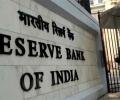
In the last three years, public sector banks have responded to the RBI's policy rates more strongly than private banks.

The reform priorities are clear: enhance savings, improve productivity. Just 25 basis points of moving interest rate up or down would not boost investment: Former RBI Governor Y V Reddy.

Successive governments focused on altering the clearance processes but largely gave a pass to the second, and essential, element of environmental regulations for monitoring pollution levels and how industries followed conditions laid down for clearances.

Modi garners nearly 37% vote nationally, courtesy West Bengal, Odisha, Karnataka and Telangana.
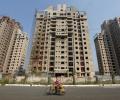
The ease with which city-level master plans are altered and land-use patterns changed without considering carrying capacities or the overall environmental footprint of urbanisation in different states has already created water and air pollution crises in several emerging and existing cities.

Across 10 prominent services, revenue to the government reduced by 20 per cent in the first year of GST compared to the last year of the service tax regime. This happened despite tax liability against these services growing by 50 per cent in one year.

'The Dalit vote traditionally went to the Congress, but everyone knows by now that the Congress and the BJP are the same. We all stand united behind Balasaheb (Prakash Ambedkar) this time.'

Data suggests that households too are expecting inflation to subside, with the three-month-ahead and the one-year-ahead expectations declining by 40 basis points, reports Abhishek Waghmare.

Women's representation in government jobs is less than 15%.

India's spending on space research almost tripled from Rs 4,163 crore in 2009-2010 to Rs 11,538 crore in 2018-2019.

The government claims the existing safeguards under the law are adequate, lawful, towards a legitimate purpose and provide for a "proportionate interference" in citizens' right to privacy, reports Nitin Sethi.

With just 11.8 per cent, the nation lags behind its neighbours and peers when it comes to women's representation in national legislatures.
